Welcome to The Creatrix.
Guilt Is Not Your Compass: A Somatic Approach to Boundary Work
Dawn Cannon | MAY 22, 2025
healing from within
personal empowerment
whole body approach
striving to thriving
stop people pleasing
trust the body
somatic healing
sacred boundaries
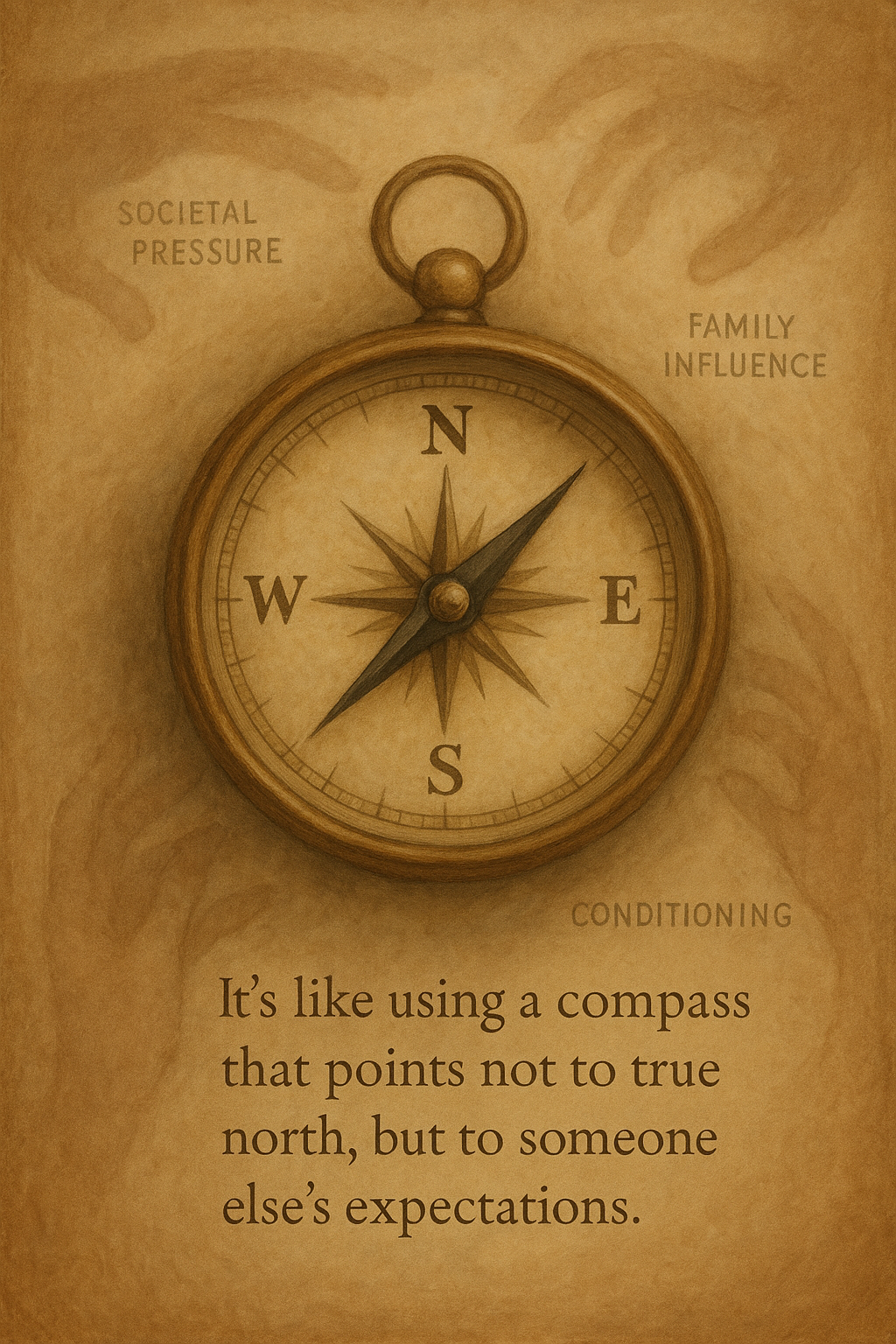
Imagine placing your hand over your heart and feeling its rhythm. A steady thrum beneath your palm, anchoring you in truth. Now imagine trying to steer your life by the static hum of guilt—a signal not of the soul, but of conditioning. It's like using a compass that points not to true north, but to someone else's expectations.
I believe that transformation begins in the body. And nowhere is this more evident than in the quiet, powerful process of boundary work. Boundaries are not declarations made only with words; they are lived truths, etched in the language of our nervous system, felt in the depth of our breath, and known in the steadiness of our bones.
When Guilt Becomes the Default Response
For many of us—especially those raised as caregivers, people-pleasers, or peacekeepers—guilt has been sold as a compass. We're taught that to be "good" means to override our instincts in favor of harmony, even when it costs us our peace. We confuse guilt with morality, discomfort with wrongdoing.
But here's the truth: guilt often isn’t a sign you've done something wrong. It’s a sign you've done something different. Something new. Something that might rattle the roles you've played for others.
The Somatic Roots of Guilt
From a trauma-informed perspective, guilt can arise as part of the fawn response—that instinct to appease or accommodate when we feel unsafe. It’s not a character flaw; it’s a survival strategy. One I know intimately.
There have been seasons in my life when I could feel myself shape-shifting to avoid disapproval. My words, my body, even my tone would bend toward what others needed from me. The price? I lost touch with what I needed.
As I began to heal, I started noticing the cues. Tension in my jaw when I was about to say "yes" but meant "no." A flutter in my chest when my boundaries were being pushed. A heaviness in my stomach that whispered, this isn’t right for me.
These weren’t signs of weakness. They were signs of wisdom.
A Body-Based Compass
Your body speaks in sensation, not judgment. It won’t label you selfish or kind—it will simply tell you what feels safe, aligned, or overwhelming.
If you’re not yet fluent in your body’s language, that’s okay. Many of us have been taught to mistrust or ignore our embodied knowing. But you can begin again, with something as simple as this:
A 2-Minute Somatic Check-In
Pause. Close your eyes. Ask yourself:
What do I feel in my jaw, chest, and belly when I say yes?
Then ask:
What do I feel when I say no?
Notice without judgment. Recognize without explanation. Witness without fixing.
From Guilt to Sacred Boundaries
When we set a boundary, guilt often rises like an old ghost. It whispers, You’re being mean. You’re letting them down. But what if guilt is not a moral siren but a signal that you're growing?
Every time I say no to something that drains me, I say yes to something sacred: my nervous system, my time, my creativity, my well-being. Boundaries are not selfish. They are an act of devotion to self-trust.
A Story from My Path
I once dated someone who, in the beginning, felt like a spark. We had shared laughs, mutual dreams, tender moments. But as time unfolded, so did misalignment. Our values, our rhythms, the very way we handled conflict began to clash.
I felt the shift not first in my mind, but in my body. My stomach tightened before dates. My energy flatlined around their presence. I started feeling distant, foggy, even irritated—not because I wanted to hurt them, but because I was ignoring the truth pulsing through my own body.
Still, I lingered. Guilt whispered, You’re expecting too much. You owe them your effort.
Eventually, my body became louder than my guilt. One morning, sitting across from them with coffee in hand, my chest felt like it was caving in. That was the moment I knew: no story, no shared history, no amount of effort could override what my body already knew.
When I honored that knowing and spoke the truth, it was hard—but it was clean. There was grief, yes, but also relief. My body exhaled.
Guilt vs. Somatic Wisdom
Guilt says: They’ll be upset if I don’t.
The body says: I feel peace when I honor my truth.
Guilt says: It’s easier to avoid conflict.
The body says: It’s easier to breathe when I’m honest.
Guilt says: I should keep the peace.
The body says: I deserve peace, too.
When guilt tries to steer the ship, it usually points us toward approval rather than alignment. But when we learn to listen to our bodies—our shoulders, our breath, our gut—we find guidance that is rooted, present, and wise.
The somatic compass isn’t always loud. Sometimes it speaks through discomfort. But with time, it becomes clearer. Reliable. A way home.
Journal Prompts to Deepen the Work
- What does guilt sound like in my mind?
- What does truth feel like in my body?
- Where have I honored a boundary and felt more free?
A Simple Ritual to Begin
Place one hand over your heart. One on your belly. Breathe. Say aloud or silently:
"I am allowed to say no. I am allowed to honor my yes. My body is my compass, and I trust its truth."
Let this be your beginning.
Boundary work is not about getting it perfect. It’s about remembering you have a right to be in your life, fully and honestly. If guilt rises, let it be a reminder—not of wrongness, but of how deeply you’ve been taught to abandon yourself. And then gently, with great compassion, choose to return.
As you begin to listen more closely to your body, be tender with yourself. You’re learning a new way—one rooted in truth, not tension.
I’d love to hear what resonates with you. What do you notice in your own body when guilt tries to speak for you? What new boundaries are calling for your attention?
This work is sacred. And you don’t have to do it alone
Dawn Cannon | MAY 22, 2025
Share this blog post

The Creatrix
CONTACT
© 2026 The Creatrix